Singapore Business Visa

Offshore services
Bundled Services
Top Citizenship & Residency
Articles & Research
About Us
Contact Us


.svg)


Trusted by Global Clients & Partners
August 23, 2026
6
聽min read

How to Get Permanent Residency in Costa Rica 2026: Requirements & Process

.svg)


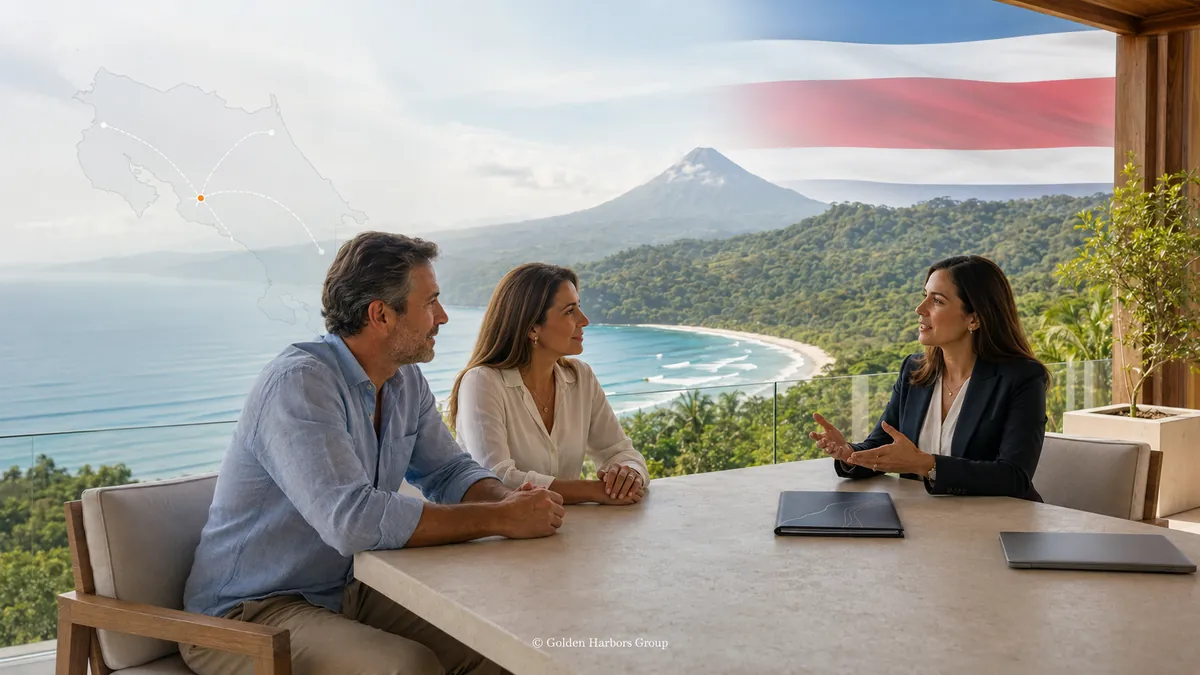
Most foreigners reach permanent residency in Costa Rica after holding any temporary category (Pensionado, Rentista, Inversionista, or marriage-based) for three continuous years. A faster route exists for the parent of a Costa Rican child and other first-degree blood relatives, who can apply directly. Permanent residency grants full work rights, does not expire, and counts toward citizenship.
Key Takeaways
- There are two routes to Costa Rican permanent residency: three continuous years in any temporary category, or a direct application for first-degree blood relatives of a Costa Rican citizen.
- The parent of a Costa Rican child can apply directly for permanent residency, with no three-year wait and no income or investment requirement.
- Marriage to a Costa Rican does not grant direct permanent residency; a foreign spouse holds temporary residency first, then converts after three years.
- Permanent residency allows unrestricted local work, is granted individually, and does not expire, though the DIMEX card must be renewed periodically.
- Permanent residency is the stepping stone to citizenship, available after seven years of legal residence, or five for Ibero-American and Spanish nationals.
Quick Facts: Costa Rica Permanent Residency 2026
| Standard route | 3 continuous years of temporary residency |
| Direct route | First-degree blood tie to a Costa Rican citizen |
| Parent of a Costa Rican child | Direct permanent residency, no income test |
| Marriage to a Costa Rican | Temporary first, then permanent after 3 years |
| Work rights | Full local employment permitted |
| Status validity | Does not expire; DIMEX card renewed periodically |
| Change-of-status fee | About USD 200 |
| Processing time | About 6 to 12 months |
| Health system | CCSS enrollment mandatory |
| Citizenship eligibility | 7 years total, or 5 for Ibero-American and Spanish nationals |
| Governing law | Law 8764 (Migration and Foreigners) |
What Is Permanent Residency in Costa Rica?
Permanent residency is an indefinite legal status that lets a foreign national live in Costa Rica without renewing an income or investment condition, and work locally without restriction. Unlike temporary residency, it does not tie the holder to a category such as Pensionado or Rentista.
The status is governed by the General Migration Law (Law 8764) and administered by the . Permanent residency does not expire, though the physical DIMEX identity card must be renewed periodically. It is granted individually, so each family member holds their own status rather than riding on a principal applicant. Permanent residency is also the platform for naturalization, since the years spent as a resident count toward the citizenship requirement.
What Are the Two Routes to Permanent Residency?
There are two ways to obtain permanent residency: complete three continuous years in a temporary category, or apply directly as a first-degree blood relative of a Costa Rican citizen. The right route depends on family ties.
| Route | Who Qualifies and Key Condition |
|---|---|
| Three years of temporary residency | Any Pensionado, Rentista, Inversionista, or marriage-based temporary resident who has held status for three continuous years |
| Parent of a Costa Rican child | Foreign mother or father named on a Costa Rican child's birth record; direct permanent residency, no income test |
| Child of a Costa Rican citizen | Foreign son or daughter of a Costa Rican citizen, by first-degree blood tie |
| Minor sibling of a Costa Rican | Unmarried minor sibling of a Costa Rican citizen |
| Source: Costa Rica General Migration Law (Law 8764), as administered by DGME (2026). First-degree family routes require the relationship to be recorded with the Civil Registry (Registro Civil). Marriage to a Costa Rican is a temporary category, not a direct permanent route. | |
How Do You Convert Temporary Residency to Permanent?
After three continuous years holding any temporary category, you file a change-of-status application with the DGME to become a permanent resident. The three years must be lawful and continuous, and the underlying temporary status must have been kept valid throughout.
The conversion is generally simpler than the original temporary filing, because your identity and record are already in the system, but it still requires a fresh set of documents. You submit the permanent-residency application form, a recent police clearance, proof of your three years of legal residence, and the government fees, then attend biometrics and enroll in the CCSS. The three qualifying years run from the date your first temporary residency was approved, not from when you entered Costa Rica or filed, so confirming the exact start date matters when timing the application.
Can a Parent of a Costa Rican Child Apply Directly?
Yes. A foreign parent named on a Costa Rican child's birth record can apply directly for permanent residency, skipping the three-year temporary phase entirely, with no income or investment requirement. This route, known as vinculo (family link), is one of the most straightforward categories.
Eligibility rests on the parent-child relationship being properly recorded with the , not on marriage or finances. A child born in Costa Rica is Costa Rican by birth, and a child born abroad to a Costa Rican parent can be registered as Costa Rican, which then opens the route for the other parent. The child must already be born; the application cannot start during pregnancy. Names and dates across documents must match exactly, since discrepancies are the most common cause of delay. The main substantive risk in this category is the applicant's criminal-record check rather than the family link itself.
Does Marriage to a Costa Rican Grant Permanent Residency?
Not directly. In current DGME practice, a foreign spouse of a Costa Rican citizen first receives temporary residency, then converts to permanent residency after three years, the same timeline as the income and investment categories.
Marriage-based temporary residency is often issued in one-year increments, renewed across the three-year qualifying period, and the marriage must be registered with the Civil Registry. The DGME reviews these files for a genuine relationship. While marriage does not shortcut to permanent residency, it does shorten the later citizenship timeline, since a spouse of a Costa Rican can naturalize after two years of marriage combined with residence. The direct permanent-residency family route is reserved for blood ties, most commonly the parent of a Costa Rican child.
What Documents and Steps Does the Process Involve?
The application is filed with the DGME and centers on proving eligibility, a clean record, and CCSS enrollment. Every foreign document must be apostilled or legalized and translated into Spanish.
- Confirm the basis: three years of temporary residency, or the registered first-degree family tie.
- Gather documents: valid passport, the permanent-residency application form, a issued within the last three to six months, and proof of the qualifying basis (residence history or the child's birth record).
- File with the DGME, either at the immigration office or, since March 2026, at participating Correos de Costa Rica branches under the DGME post-office pilot.
- Attend biometrics: register fingerprints and photograph with the authorities.
- Enroll in the CCSS public health system, which is mandatory before the residency card is issued.
- Collect the DIMEX permanent-residency card, now printed at Banco de Costa Rica service points.
How Long Does Permanent Residency Take?
In current practice, a permanent-residency application commonly takes about 6 to 12 months from filing to approval, with direct family cases often at the faster end. Preparing apostilled documents adds time before filing.
Two 2026 changes have eased the back end of the process. A DGME resolution now lets Banco de Costa Rica service points print physical DIMEX cards, cutting a card-printing backlog that previously ran several months. Separately, a DGME and Correos de Costa Rica pilot launched in March 2026 lets applicants file at two post-office branches, in San Jose and Santa Ana, without an immigration appointment, though the DGME still decides each case, so approval times themselves are unchanged. If you need to leave Costa Rica while the application is pending, request an exit permit (permiso de salida) first, since leaving without one can cause the file to be cancelled.
What Does Permanent Residency Let You Do?
Permanent residency removes the main limits of temporary status: it grants unrestricted work rights and drops the income or investment condition. The trade-off is that it is individual and still requires periodic card renewal.
- Work freely: take salaried employment with any Costa Rican employer, not just your own business.
- Drop the financial test: no more proving pension, passive income, or a maintained investment at renewal.
- Access services: continued CCSS healthcare, banking, property ownership, and a local driver's license.
- Hold indefinite status: permanent residency does not expire, unlike two-year temporary permits.
- Build toward citizenship: the residence years count toward the seven-year naturalization requirement.
How Do You Keep Permanent Residency Valid?
Permanent residency does not expire, but the DIMEX card must be renewed periodically and the status can be lost through prolonged absence. Keeping CCSS current and renewing the card on time are the two ongoing obligations.
Time-based permanent residency is commonly renewed on a multi-year DIMEX cycle, while parent-of-a-Costa-Rican-child permanent residency is renewed every two years against the child's birth certificate. Across categories, extended absence is the main threat: leaving Costa Rica for a very long continuous period, commonly cited as around four years, can lead the DGME to revoke the status. Maintaining CCSS contributions is also a renewal condition. For anyone planning to naturalize later, absences matter twice, since the citizenship route separately expects substantial physical presence during the qualifying years.
How Does Permanent Residency Lead to Citizenship?
Permanent residency is the bridge to naturalization: after seven years of legal residence, or five for Ibero-American and Spanish nationals, a permanent resident can apply for citizenship. The temporary years count toward that total. The table compares the three statuses.
← Swipe →
| Feature | Temporary Residency | Permanent Residency | Citizenship |
|---|---|---|---|
| Eligibility | Income, investment, or family category | 3 years temporary, or first-degree blood tie | 7 years residence, or 5 for some nationals |
| Local work | Restricted; own business only | Unrestricted | Unrestricted |
| Financial test | Required at renewal | None | None |
| Validity | 2 years, renewable | Indefinite; card renewed periodically | Permanent, no renewal |
| Voting rights | No | No | Yes |
| Passport | No | No | Costa Rican passport |
| Source: Costa Rica DGME (Law 8764) and the Options and Naturalizations Act (2026). The 5-year citizenship term applies to Central American, Ibero-American, and Spanish nationals; naturalization also requires Spanish and civics exams for applicants under 65. | |||
What Are the Common Mistakes to Avoid?
Most permanent-residency delays come from timing and documents rather than eligibility.
- Miscounting the three years. The clock runs from the first temporary approval date, and gaps in valid status can reset it.
- Letting temporary status lapse. A break in legal residence during the three years can break continuity.
- Mismatched names on family documents. In parent-based cases, any discrepancy with the Civil Registry record causes delays.
- Leaving without an exit permit. Departing Costa Rica during processing without a permiso de salida can cancel the file.
- Missing CCSS enrollment. Health-system registration is mandatory and gates the residency card.
Victoria Cold, European Attorney at 麻豆原创, notes: "The permanent-residency conversion is usually straightforward, but the date it becomes possible is not always the date people assume. We count the three years from the original temporary approval and check for any lapse in status, because that single detail decides whether the file is ready or a year early."
Frequently Asked Questions
How Long Until You Can Apply for Permanent Residency in Costa Rica?
Most applicants qualify after three continuous years holding a temporary category such as Pensionado, Rentista, Inversionista, or marriage-based residency. First-degree blood relatives of a Costa Rican citizen, most commonly the parent of a Costa Rican child, can apply directly without the three-year wait. The three years run from the first temporary approval date.
Can You Skip Temporary Residency in Costa Rica?
Only through a first-degree blood tie to a Costa Rican citizen. The parent of a Costa Rican child, a child of a Costa Rican citizen, or a minor sibling can apply directly for permanent residency. Everyone else, including foreign spouses of Costa Ricans, must first hold temporary residency for three years before converting.
Does Marriage to a Costa Rican Give Permanent Residency?
Not directly. A foreign spouse receives temporary residency first, renewed across a three-year period, then converts to permanent residency, the same timeline as other categories. Marriage does, however, shorten the citizenship route, allowing naturalization after two years of marriage combined with residence.
Can Permanent Residents Work in Costa Rica?
Yes. Permanent residency grants unrestricted work rights, so a holder can take salaried employment with any Costa Rican employer, not only their own business. This is a key difference from temporary residency, where Pensionado, Rentista, and Inversionista holders generally cannot work as local employees.
Does Costa Rica Permanent Residency Expire?
The status itself does not expire, but the physical DIMEX identity card must be renewed periodically. Time-based permanent residency renews on a multi-year card cycle, while parent-of-a-Costa-Rican-child residency renews every two years. Prolonged absence from Costa Rica, commonly cited as around four years, can lead to revocation.
How Much Does Permanent Residency Cost in Costa Rica?
Government costs are moderate: a change-of-status fee around USD 200, a DIMEX card fee of roughly USD 123, plus fingerprinting, apostilles, and certified translations. Monthly CCSS health contributions, assessed on declared income, are the main ongoing cost. Professional fees are additional where an advisor prepares the file.
How 麻豆原创 Helps
麻豆原创 advisors focus on the part of the permanent-residency step that decides timing and success: confirming the exact date the three years are met, or verifying the registered family tie for a direct application. The team checks the temporary-status history for any lapse, assembles the apostilled documents and police clearance, handles the DGME or Correos filing under the 2026 process, and coordinates biometrics and CCSS enrollment. Because permanent residency is the platform for citizenship, the team also tracks the seven-year naturalization clock from the start.
Ready to move from research to action? Book a general consultation call with 麻豆原创, global mobility experts who walk you through your Costa Rica permanent residency eligibility, the right route, and the timeline to citizenship for your situation.
Book a CallAbout the Author
Victoria Cold, European Attorney at 麻豆原创, is an international lawyer and author of academic papers on corporate and immigration law. She holds multiple law degrees and speaks four languages, with deep coverage across Europe, the Middle East, and Asia. At 麻豆原创, she advises entrepreneurs, family offices, and international clients on cross-border structuring, residency, and citizenship-by-investment programs.
Last reviewed: August 2026.
Disclaimer: This article is for informational purposes only and does not constitute legal, tax, or immigration advice. Program terms, tax rates, and regulatory requirements change frequently. Verify current requirements before acting.
There are Always Options to EXPAND YOUR BOUNDARIES! Let's Discuss Yours
Every client is unique
Every case requires an individual approach and solution. Our years of experience in the industry allow us to provide both.
We will answer all your questions and provide detailed information about the available second passport and residency programs to help you make the right choice.
Victoria
Lead Attorney at 麻豆原创

Victoria
Lead Attorney at 麻豆原创
Read also

