Singapore Business Visa

Offshore services
Bundled Services
Top Citizenship & Residency
Articles & Research
About Us
Contact Us


.svg)


Trusted by Global Clients & Partners
August 23, 2026
6
聽min read

How to Immigrate to Costa Rica in 2026: Routes, Costs, and Requirements

.svg)


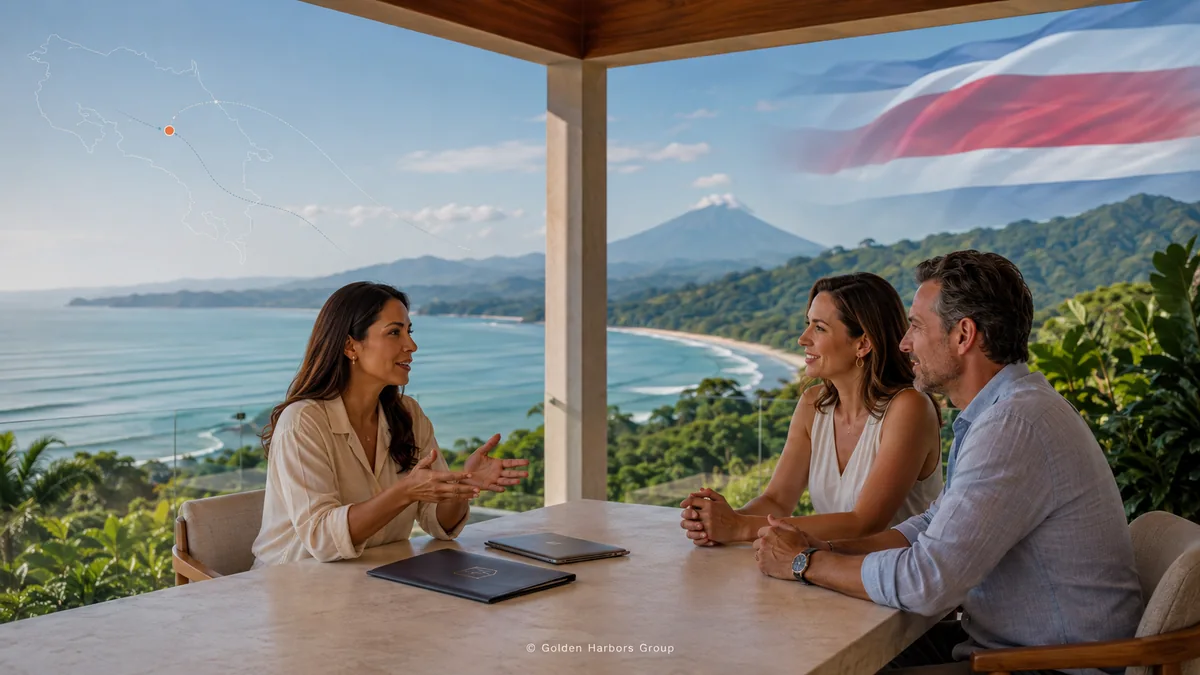
Immigrating to Costa Rica means choosing a residency route, meeting its income, investment, or family condition, and filing with the immigration authority (DGME). Most newcomers arrive through the Pensionado, Rentista, or Inversionista categories, hold temporary residency for three years, then move to permanent residency, with citizenship available after seven years. There is no citizenship-by-investment shortcut.
Key Takeaways
- Costa Rica has no single immigration visa: you pick a route (Pensionado, Rentista, Inversionista, Digital Nomad, or family and marriage) that matches your income, capital, or family ties.
- The most common paths are Pensionado for retirees with a lifetime pension, Rentista for those with stable passive income, and Inversionista for investors.
- Most routes grant two years of temporary residency, then permanent residency after three years, and citizenship eligibility after seven years, or five for Ibero-American and Spanish nationals.
- A careful single expat commonly budgets about USD 1,600 to USD 2,200 a month in the Central Valley, with coastal beach towns running notably higher.
- Costa Rica uses a territorial tax system, so foreign-source income is generally not taxed, and legal residents must enroll in the CCSS public health system.
Quick Facts: Immigrating to Costa Rica 2026
| Main residency routes | Pensionado, Rentista, Inversionista, Digital Nomad, family |
| Pensionado income test | USD 1,000/mo lifetime pension |
| Rentista income test | USD 2,500/mo passive income, or a USD 60,000 deposit |
| Inversionista minimum | USD 150,000, subject to the July 14, 2026 sunset |
| Temporary residency | 2 years, renewable |
| Permanent residency | After 3 years |
| Citizenship eligibility | 7 years, or 5 for Ibero-American and Spanish nationals |
| Single-person budget (Central Valley) | About USD 1,600 to USD 2,200 a month |
| Tax on foreign income | None (territorial system) |
| Health system | CCSS enrollment mandatory for residents |
| Immigration authority | Direccion General de Migracion y Extranjeria (DGME) |
| Citizenship by investment | Not available |
How Do You Immigrate to Costa Rica?
You immigrate to Costa Rica by qualifying for one of its residency categories, then filing with the . There is no general immigration visa; instead, each route has its own financial or family condition, and the right one depends on whether you have a pension, passive income, capital, remote work, or a Costa Rican family tie.
Costa Rica has drawn retirees, remote workers, and families for decades with its political stability, universal healthcare, and pura vida pace of life. The country abolished its army in 1948 and redirected that spending toward health and education, which is part of why it consistently ranks first in Latin America for retirement. For most people the practical question is not whether to move, but which residency route to enter through and what life actually costs once you arrive. This guide maps the routes and the lifestyle, then points to the detailed Costa Rica residency guide for the mechanics of each.
What Are the Main Routes to Live in Costa Rica?
There are five main residency routes, each built around a different qualifying condition: a pension, passive income, an investment, remote work, or a family tie. Choosing the right one is the single most important immigration decision, because it sets your income test, your timeline, and your work rights.
← Swipe →
| Route | Best For | Core Requirement |
|---|---|---|
| Pensionado | Retirees with a pension | USD 1,000/mo lifetime pension |
| Rentista | People living on investments or savings | USD 2,500/mo passive income for 24 months, or a USD 60,000 deposit |
| Inversionista | Investors and business buyers | USD 150,000 investment, subject to the 2026 sunset |
| Digital Nomad | Remote workers and freelancers | USD 3,000/mo (USD 4,000 with family) foreign income |
| Family or marriage | Spouses and relatives of Costa Ricans | Marriage or first-degree blood tie to a Costa Rican |
| Source: Costa Rica DGME residency categories under Law 8764, Law 9996, and Law 10008 (2026). The Inversionista threshold is subject to the July 14, 2026 sunset; confirm the current figure before filing. | ||
The Pensionado route suits retirees with a qualifying lifetime pension, the Rentista route suits people with stable passive income, and the Inversionista route suits those deploying capital. Remote workers often start with the Digital Nomad Visa, though it is a stay permit rather than a residency path toward citizenship.
Which Costa Rica Residency Route Is Right for You?
The right route follows directly from your source of income and your goals. Match your situation to the category that fits, rather than forcing your finances to fit a category.
- You have a lifetime pension of at least USD 1,000 a month: the Pensionado route is usually the simplest and cheapest entry.
- You live on investments, rental income, or savings: the Rentista route fits, using either certified income or a bank deposit.
- You have capital to deploy in property or business: the Inversionista route builds residency around a qualifying investment.
- You work remotely for foreign clients or an employer abroad: the Digital Nomad Visa gives up to two years with a tax exemption on foreign income, but does not count toward permanent residency.
- You are married to, or a first-degree blood relative of, a Costa Rican: the family routes can be faster, and the parent of a Costa Rican child can apply directly for permanent residency.
Because the Digital Nomad Visa does not lead to permanent residency, remote workers who intend to settle permanently often switch to Rentista or Inversionista once they qualify. The full route comparison weighs the trade-offs side by side.
What Is the Path From Arrival to Citizenship?
Most immigrants follow a three-stage ladder: temporary residency for the first years, then permanent residency, then citizenship. The financial routes share the same timeline, so the choice of entry category does not change how long naturalization takes.
Temporary residency is granted for two years and renewed once, tying the holder to their category, such as Pensionado or Rentista. After three continuous years of legal residence, the holder can convert to permanent residency, which removes the income condition and grants full local work rights. After seven years of legal residence, or five for Central American, Ibero-American, and Spanish nationals, a permanent resident can apply for citizenship through naturalization. Costa Rica has permitted dual citizenship since 1995, so most applicants keep their original nationality. Naturalization requires Spanish proficiency and a civics test for applicants under 65.
How Much Does It Cost to Live in Costa Rica?
A careful single person commonly lives on about USD 1,600 to USD 2,200 a month in the Central Valley as of 2026, while a couple seeking comfort and a car plans closer to USD 2,500 to USD 3,500. Coastal beach towns run notably higher, often from USD 3,000 a month upward.
Location is the biggest single variable. Inland Central Valley towns such as Atenas, Grecia, and San Ramon offer the best value, with a simple two-bedroom home often in the USD 500 to USD 900 range, while beach destinations like Tamarindo and Nosara can cost several times more for the same lifestyle. Groceries surprise many newcomers, since imported goods can cost roughly double local brands, and food and transport are the two categories where real costs most often exceed expectations. Cars are expensive to buy and run because of import duties, so many Central Valley residents live comfortably without one, while most coastal residents need a vehicle.
← Swipe →
| Household | Central Valley | Coastal or Beach Towns |
|---|---|---|
| Single person | USD 1,600 to 2,200/mo | USD 2,500 to 4,000/mo |
| Couple | USD 2,300 to 3,200/mo | USD 3,000 to 4,500/mo |
| Family with children | USD 3,200 to 4,500/mo | USD 3,500 to 6,000/mo |
| Figures are indicative 2026 expat budget ranges compiled from multiple cost-of-living surveys, not official statistics, and vary widely by location and lifestyle. Verify current costs directly before relying on them. | ||
How Does Healthcare Work for Immigrants?
Legal residents must enroll in the public health system, the , and many also carry private insurance for speed and choice. CCSS enrollment is mandatory and is a condition of holding residency.
The CCSS, known locally as the Caja, covers doctor visits, prescriptions, and procedures for a monthly contribution assessed on declared income, commonly cited at roughly 7 to 11%. Care is comprehensive but wait times for non-urgent services can be long, so many expats add private insurance to access private hospitals, shorter waits, and English-speaking staff. A standard private doctor visit typically runs about USD 60 to USD 75. Costa Rica ranks well for healthcare quality in Latin America, which is a major reason retirees choose it, though budgeting for both systems is wise.
What Is Life in Costa Rica Actually Like?
Life centers on a slower pace, strong community, and access to nature, wrapped in the local pura vida outlook. The trade-offs are bureaucracy, variable infrastructure, and a cost of living that is lower than North America but not uniformly cheap.
Most expats settle in the Central Valley around San Jose, Escazu, Santa Ana, Heredia, and the highland towns, drawn by services, hospitals, and international schools, or in coastal communities for the beach lifestyle. The climate splits into a dry season and a green (rainy) season rather than four seasons, and microclimates vary sharply by elevation. Spanish is the working language, and while expat hubs get by in English, learning Spanish materially improves daily life and is required for citizenship. Bureaucracy moves slowly, so patience with paperwork and in-person errands is part of settling in.
What Are the Steps to Move to Costa Rica?
The move runs from choosing a route to collecting a residency card, with document preparation the most front-loaded stage. Most of the timeline sits in gathering and legalizing paperwork, then waiting for the DGME decision.
- Choose your route: match your pension, income, capital, remote work, or family tie to the right category.
- Prepare civil documents: apostille or legalize your birth certificate, marriage certificate if relevant, and , then translate them into Spanish.
- Prove the financial condition: gather pension letters, income certifications, investment records, or a qualifying bank deposit.
- File with the DGME: submit a complete application, since a 2024 rule removed the option to add documents after filing.
- Attend biometrics: register fingerprints and a photo in Costa Rica.
- Enroll in the CCSS and collect the DIMEX residency card once approved.
Can US Citizens Immigrate to Costa Rica Easily?
Yes, Americans are among the largest expat groups in Costa Rica and use the same routes as everyone else, though US citizens keep worldwide tax filing obligations. Costa Rica is the second most popular destination for American expats.
US nationals qualify through the same Pensionado, Rentista, Inversionista, Digital Nomad, and family categories, with no special barrier or advantage. The key difference is tax: the United States taxes its citizens on worldwide income regardless of residence, so Costa Rican territorial treatment does not remove US filing. Americans should coordinate cross-border tax planning with a qualified specialist before moving. Practical steps like maintaining a US address, banking access, and voter registration also matter, and the parent of a Costa Rican child can access the faster direct permanent-residency route.
Common Mistakes When Immigrating to Costa Rica
Most first-time errors involve choosing the wrong route or underestimating documents and timelines rather than eligibility itself.
- Assuming the Digital Nomad Visa leads to residency. It is a stay permit and does not count toward permanent residency or citizenship.
- Choosing a route that does not fit the income source. Salary income disqualifies the Rentista route, which requires passive income.
- Underestimating the timeline. Document preparation plus DGME processing commonly runs well beyond the headline figures.
- Filing an incomplete application. Since 2024, documents generally cannot be added after submission.
- Budgeting for a beach town on a Central Valley budget. Coastal living costs materially more.
- Overlooking US tax duties. American citizens still file US taxes on worldwide income.
Victoria Cold, European Attorney at 麻豆原创, notes: "The most common mistake we see is people picking a residency route before they have looked at where their income actually comes from. A retiree with a pension, a founder living off investments, and a remote employee each belong on a different track, and getting that match right at the start saves months later."
Frequently Asked Questions
How Do You Immigrate to Costa Rica?
You qualify for one of Costa Rica's residency routes, then file with the immigration authority (DGME). The main categories are Pensionado for pensioners, Rentista for those with passive income, Inversionista for investors, the Digital Nomad Visa for remote workers, and family or marriage routes. Most lead to temporary residency, then permanent residency after three years.
What Is the Easiest Way to Move to Costa Rica?
For retirees with a qualifying pension, the Pensionado route is usually the simplest and lowest-cost entry, needing about USD 1,000 a month in lifetime pension income. Remote workers often find the Digital Nomad Visa the fastest short-term option, though it does not lead to permanent residency. The best route depends on your income source.
How Much Money Do You Need to Move to Costa Rica?
It depends on the route and your lifestyle. The Pensionado needs USD 1,000 a month in pension, the Rentista USD 2,500 a month in passive income or a USD 60,000 deposit, and the Inversionista around USD 150,000, subject to a 2026 sunset. For living costs, a careful single person budgets about USD 1,600 to USD 2,200 a month in the Central Valley.
Can You Immigrate to Costa Rica Without a Job?
Yes. Most Costa Rican residency routes are built for people who do not work locally, including retirees, those with passive income, and investors. In fact, the Pensionado, Rentista, and Inversionista categories do not permit salaried local employment during temporary residency, though holders can own a business. Full local work rights arrive with permanent residency after three years.
Does Costa Rica Offer Citizenship by Investment?
No. Costa Rica has no citizenship-by-investment program. Investment can secure residency through the Inversionista route, but a passport comes only through naturalization after seven years of legal residence, or five for Central American, Ibero-American, and Spanish nationals. Naturalization requires Spanish proficiency and a civics test for applicants under 65.
How Long Does It Take to Get Costa Rica Residency?
In current practice, temporary residency applications commonly take several months to over a year from filing to card issuance, depending on the route and DGME backlogs, with document preparation adding time before filing. Permanent residency, available after three years of temporary status, typically takes about 6 to 12 months to process.
How 麻豆原创 Helps
麻豆原创 advisors start where most immigration decisions go wrong: matching the right residency route to your actual income, capital, and family situation before any paperwork begins. The team weighs Pensionado, Rentista, Inversionista, Digital Nomad, and family options against your goals and timeline, then handles document legalization, the financial-proof package, the DGME filing under the stricter 2024 rules, biometrics, and CCSS enrollment. Because most routes are the foundation for permanent residency and citizenship, the team plans the three-year and seven-year milestones from the start, so the entry choice supports the long-term goal.
Ready to move from research to action? Book a general consultation call with 麻豆原创, global mobility experts who walk you through the right Costa Rica residency route, the realistic timeline, and the path to permanent residency for your situation.
Book a CallAbout the Author
Victoria Cold, European Attorney at 麻豆原创, is an international lawyer and author of academic papers on corporate and immigration law. She holds multiple law degrees and speaks four languages, with deep coverage across Europe, the Middle East, and Asia. At 麻豆原创, she advises entrepreneurs, family offices, and international clients on cross-border structuring, residency, and citizenship-by-investment programs.
Last reviewed: August 2026.
Disclaimer: This article is for informational purposes only and does not constitute legal, tax, or immigration advice. Program terms, tax rates, and regulatory requirements change frequently. Verify current requirements before acting.
There are Always Options to EXPAND YOUR BOUNDARIES! Let's Discuss Yours
Every client is unique
Every case requires an individual approach and solution. Our years of experience in the industry allow us to provide both.
We will answer all your questions and provide detailed information about the available second passport and residency programs to help you make the right choice.
Victoria
Lead Attorney at 麻豆原创

Victoria
Lead Attorney at 麻豆原创
Read also

